Tuesday, May 5, 2009

Sophie's World by Jostein Gaarder

Once upon a time there lived a 14-year old girl Sophie Amundsen. She was quite an ordinary teenager - doubting little things, disliking her looks, finding school boring... normal stuff. All this was so till the day she received a mysterious letter containing two questions Who are you? Where does the world come from? together with a strange looking postcard addressed to a Hilde Møller Knag she definitely had never heard before. These letter and postcard were followed by a thick packet from a not less mysterious philosopher Alberto Knox. The packet contained the first lecture on philosophy that would be followed by so many others to give Sophie and the reader the full picture from Socrates to Freud.
The plot consists of two main lines: the lectures on philosophy and Sophie's line itself. The latter becomes so complicated and puzzling sometimes that you might feel like you are reading a book about a book about a book... But on the whole, the idea is fantastic. It takes you away from dusty classrooms with boring professors into an exciting world of human wisdom and search for truth. It provokes you on every page and is unlikely to leave indifferent.
So, together with Sophie confused and at the same time excited, I challenged myself with some questions and data. For example, the very first question Who are you?.. I have already faced this one. One dear friend of mine really likes asking it from time to time (no name and profession are accepted as an answer). I used to answer that I am a woman. My husband said he was an open book. If asked now I would probably reply I am a loving child. It feels like I have started moving back and find myself more often with my mouth open. And I think now I know more about love. And there is still so much childhood and love ahead...

Tuesday, April 28, 2009

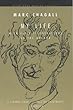
My Life by Marc Chagall


"Will God or someone give me the power to breathe my sigh into my canvases, the sigh of prayer and sadness, the prayer of salvation, of rebirth?"
Marc Chagall
"... an astounding universe of blue brides tumbling head over heels through the air and a pale musician floating amid a seven-armed candelabrum, a red nanny goat, and other mutable characters. There were so many different colours and objects that I was a long time taking in the marvelous disorder of the composition. That painting had music: a ticking clock, moaning violins, bleating goats, fluttering wings, and endless streams of words. It also had scents: lighted candles, wildflowers, an animal in heat, women's lotions and creams. The whole scene seemed bathed in the nebula of a happy dream; on one side the atmosphere was as warm as an afternoon siesta, and on the other you could feel the cool of a country night... that Chagall was an invitation to a game. I asked myself fascinated, how it was possible to paint like that, without an ounce of respect for the norms of composition and perspective my art teacher was trying to instill. If this artist can do whatever he pleases, so can I... I thought Chagall was a boy my own age and years later, in April 1985 when he died in the ninety-seventh year of his eternal youth, I found that in fact he had always been the boy I imagined..."
Isabel Allende "Paula"
So naturally from one book to another Chagall entered my world with his paintings, autobiography and poems, all full of miracles and fairy-tales. His autobiography is a must for all those unsupported geniuses that live in us. We often wait for understanding and recognition while the most important for any artist (in the full meaning of the word) is to create, to forget yourself in whatever you do, just because it cannot be otherwise.
So, I followed him from a poor Jewish country house in Vitebsk to Paris and then back to Soviet Russia and back to Europe again. I leafed through his early years and first attempts to paint, the hardships only his light-heartedness could take him throgh, poverty, lack of understanding, his first meeting with Bella (his life-long muse), Paris studios. And every page was filled with humour and love of life as it is. And so often it seemed that it would be so much better to fly over the Eiffel Tower in an airy wedding dress under an egg-like sun of Marc Chagall.

Friday, March 27, 2009

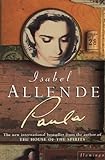
Paula by Isabel Allende

I must admit that Isabel Allende has been on my list for quite some time. And like everything valuable, I kept receiveing information about her from different people, I came across interviews with her and numerous books in the library till the day I bought the book Paula and opened it.
Everyone who has ever seen interviews with Isabel Allende knows she is quite an open person, honest about her feelings, true to her ideas and beliefs. But Paula is not just honesty or truth, this is revelation, a bleeding wound of a woman whose young and beautiful daughter is dying gradually turning into a plant, a shadow.
The book is obviously autobiographical, this is a memoir written in the form of a letter to Paula for her to read when she comes out of the coma to remember everything that had happened in the past and to learn about all that was going on while she was in the coma. The book brings us to Isabel Allende's childhood and adolescence, gives an idea about the history of Chille and introduces us to remarkable relatives of hers.
However, what appealed most to me was an incredible balance created by the writer beween tragic and ironic, touching and hilarious. I went to such extremes while reading the book. The truth is I couldn't help associating myself with Paula (she was my age, also recently married with the whole life full of prospects ahead). That is why it was physically hard to read those parts describing the efforts of her family to save her, their feelings and their inconsolable grief. On the other hand, Allende's unbelievable humour kept me from falling into complete sadness and I quite often found myself giggling in the middle of the night.
Well, there is not much more to say, apart from the fact that it was probably the most moving book I have recently read.
For more on Isabel Allende, her works and The Foundation see
www.isabelallende.com and www.isabelallendefoundation.org/iaf.php

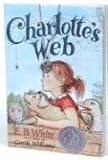
Charlotte's Web by Elwyn Brooks White


Having an idea to write a children's book I fearlessly plunged myself into the children's literature. The first book on my way happened to be Charlotte's Web (maybe, because I had on my mind a sweet girl called Charlotte). It was a one day journey I could not stop half way through. I was amazed by simple wisdom of this book, the wisdom we often search in special sections in bookshops called New Age or Esoterica. We go through hundreds of pages about building relations, working at relations... Funny enough but here they are - 180 pages of unselfish friendship.
The main character of the book is the piglet Wilbur saved by the farmer's daughter Fern from being killed and later sent to live in her uncle's farm. The girl attached to Wilbur and enchanted by the animal world in the farm tends to spend a lot of time there listening to their conversations (as you may guess, animals speak and you can definitely hear it too if you are open for it). However, being only a human Fern soon finds other things to do including falling for a neighbour boy. On a farm where everyone seems too busy with their own things Wilbur feels forgotten and lonely (you should never trust humans concerning friendship). And then a miracle happens. Wilbur hears a lovely voice belonging to the grey spider Charlotte. She is willing to befriend Wilbur and moreover to save him from being slaughtered at Christmas (at least I am vegetarian and didn't feel that guilty when reading about poor Wilbur's feelings after the news reached him). Unlike many promises made by people, Charlotte succeeds so by making Wilbur Some Pig, Terrific, Radiant and Humble. And please note, Wilbur does not get cocky and has nothing like star fever. Quite the opposite, he feels immensely grateful as he knows he is just an ordinary pig having a true friend willing to save him. How many of us can admit we are quite ordinary? (Ok, I have one person on my mind but he is dead for quite some time). Naturally there comes time for Charlotte to die and Wilbur takes care of her children and later befriends three of them.
I think that one of the biggest discoveries on my way lately is that treasures are often in simple things, that there is so much knowledge and truth around us, that we have forgotten about miracles since the day we stopped believing in speaking animals and toys moving at night when everyone is asleep. And I also think that the reason why children are so much smarter and kinder than us is that they still remember all these stories containing tons of wisdom impossible to substitute with Hollywood movies (no matter how good they are) or depressing newspapers.

Wednesday, January 21, 2009

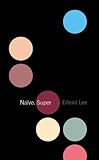
Naïve. Super and Gone with the Woman by Erlend Loe

In November 2008 I happened to be in the Hague where a Norwegian writer Erlend Loe presented his newly written novel. I have not had a chance to read that novel yet but I have read two of his earliest books that brought him if not fame but recognition. I loved the books, especially Naive. Super, but they are both written in a very easy manner and probably like their author they do not claim to be something not heard or seen before, they simply tell us about another way to look at eternal topics of sense of life, essence of love and need to be with somebody. The books guarantee a couple of laughs, some very broad smiles and light thinking process afterwards.
It is actually quite interesting how different the instruments used by writers can be. They can drive you into depression like it was skillfully done by our well known and respected Dostoevsky, they can touch every nerve as Hemingway liked to do (his nerves as known were in a much worse condition, though) or they can make you laugh, laugh together with the characters, because there is no need to die, there is no need for dramas - there will always be some place for doubts, sadness, goodbyes and loneliness, but they can be embraced just as anything else, I think.

Frida Kahlo in Mexico by Robin Richmond

This is no fiction book to marvel play on words or richness of the vocabulary. I borrowed it from the library after having watched "Frida" with Salma Hayek to know what could be considered true and what not. Of course, we will never know many things (least of all the truth) but let's not forget that Frida Kahlo was quite an exhibitionist and left not only the paintings who alone are stories enough but also diaries, letters and notes. "Frida in Mexico" is an attempt to understand her art, her life, her love, her country.
It is quite incredible how things can become different as soon as you go deeper. Primitive as they might seem for somebody who cherishes realistic art, Frida's paintings are no less unique - one simply has to be prepared for them. And to do so one should know about the woman who stands behind them, her incredible story of survival and fight for life, her disastrous love for Diego Rivera, her beliefs in a better future of the world, her patriotism.
It was quite a revelation for me to read Frida's biography. A small woman with a broken spine who suffered most of her life and still managed to win over not only Mexico but the whole world by her talent, will power and buoyancy.

The Book of Illusions by Paul Auster

After losing his wife and two little sons in a plane crash, a university professor David Zimmer isolates himself from the world and falls into hard drinking. Ironically the death of the family makes him rich so he allows himself a break from teaching and spends days in his apartment. It drags on and on till the day he accidentally switches on his TV and bursts out laughing watching an old silent comedy starring a Hector Mann. Surprised by his own reaction David decides to learn more about Mann and his work. He finds out that Hector Mann mysteriously disappeared in the 1920s having left only some silent movies after him. David makes up his mind to watch them and write a book about them. This brings him to an unexpected discovery that Hector Mann who disappeared over 60 years ago is still alive. When a person experiences such misery and shock it is hard to find their own place in the world again. And though it sometimes seems that the story is over-dramatic especially at the end, there is certain appeal in all those endless losses and findings and yet again losses the protagonist goes through.
The book is full of sadness and the topic of death and futility is on the surface. Everything has its beginning and its end. One can fool time by writing a book or making a film but they will all come to an end as well, one day sooner or later. What is left? To live in the moment, maybe. To grasp what might be yours, to appreciate if what you have grasped is really that good and desirable. To remember that life goes on despite anything.