Tuesday, December 2, 2008

Life and Times of Michael K. by J. M. Coetzee

Here comes Life and Times of Michael K., another book by Coetzee. I can hardly say if I like him or not and why I continue reading him. His prose is powerful and sadly appealing. His ability to go into such details to make you feel every emotion from repulsion to delight is impressive. And yet there is something gray-coloured and dragging on every page that leaves you hopeless and joyless, a kind of feeling you get on a winter day when instead of snow it starts raining and mud is all around and the sun seems to have abandoned this miserable Earth.
The main character of the novel is Michael, a simple gardener in Cape Town. In the middle of the civil war in South Africa he decides to take his sick mother out of the city to rural Prince Albert, the place where she was born. On the way to Prince Albert his mother dies. Michael still manages to bring her ashes to the place where she supposably was born. And then he realizes he is absolutely alone and he has to survive somehow. He hides on an deserted farm and plants vegetables finding a secret pleasure in growing and watering them. He is some kind of Robinson Crusoe who does not want to be found. Moreover, he prefers to stay there forever away from people and their wars. However, he gets into a work camp where he fails to adapt and later on after a successful escape he returns to his deserted farm to continue growing pumpkins and hiding from the world. There he is found by the police being almost dead of starvation and yet accused of helping arsonists hiding in the mountains. He is taken to a rehab centre where he meets a doctor deeply moved by his story. However, he escapes again to come back to Cape Town and to finally find "the moral of it all, the moral of the whole story: that there is time enough for everything" and this is an amazing conclusion, a soothing one after all.
My relations with Coetzee are way too complicated. On the one hand, they remind me of the films directed by Martin Scorcese (not of their contents, but of my promising to myself to never go to his films again and always being in the cinema whenever a new movie is on). On the other hand, they are as hysterical as teenage quarrels when you shout at his face to never call him and then spend evenings breathing at the telephone receiver. And just as I know I will see a new Scorsese's film as well as I won't be able to stay silent forever no matter who I have a fight with, I am most likely to read Coetzee again (especially that last Sunday I bought "Disgrace" after having promised to myself a holiday away from Coetzee).

Tuesday, November 18, 2008

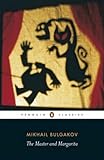
Master and Margarita

Among all the books you may find in the libraries, shops and on the bookshelves in your grandparents' house there are those to enchant you or to bore you to death, to make you smile and even laugh or to drop tears. However, there is another category of books. They are those to love or to hate. Those books will endlessly provoke hot discussions, they will be forbidden by one regime and praised by another, they will be cursed and then introduced into a school programme as some kind of masterpiece. Master and Margarita is such a book. It was read by my parents' generation under the desk in the office (if found with the book you would easily have lost your job) and by me at school. There is no doubt that it is the most enigmatic book in the Russian literature. This is the book they always fail to film, simply because it is quite impossible.
The novel brings us simultaneously to Moscow of 1930-s visited by a mysterious magician named Woland and his equally mysterious companions and the Jurusalem of Pontius Pilat. The main characters of the book are the Master, whose novel describing the meeting of Pontius Pilat and Jesus was severely critisized to have resulted in his burning the manuscript and getting into a mental hospital, and Margarita, his devoted lover, who strikes a bargain with Woland (none other than Satan in the book) to rescue her Master.
The plot is highly complicated especially for a non-Russian reader as it is abundant in realia of the Soviet times and filled with a number of secondary characters. Yet a little patience may reward you enormously.
One of the most intriguing figures in the novel is definitely Woland. Since when did Satan become so sadly appealing? Is it a whim of the modern times from Marie Corelli and her "The Sorrows of Satan" to Al Pacino's Satan in "The Devil's Advocate"? Hard to say. But the fact you take Satan as a sage is evident. No matter who has created it all, what was before and what will be after, if you live from your heart and are true to yourself and those you love, there is nothing to be afraid of.
The most quoted line in The Master and Margarita is probably "Manuscripts don't burn". It can be interpreted in many ways. Sic transit gloria mundi. Everything passes but only real things stay, they can be destroyed and yet they will resurrect and we are remembered through centuries and generations only if we have managed to create them despite all the efforts and pains.

Tuesday, November 11, 2008

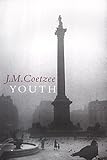
Youth by J. M. Coetzee

I possess a book called "1001 Books You Must Read Before You Die". There are 12 books by J. M. Coetzee there - an absolute record. I tried to read him once before and although his writing was really powerful and the plot seemed good, - I did not feel involved, carried away, fascinated. However, I gave Coetzee another try and I was surprised.
Youth is autobiographical yet heavily fictionalised. The main character of the book is John, a South African migrant who abandons his own country and goes to London searching for more culture and more possibilities to become a writer. Not only he fails to integrate and find recognition, but his inspiration seems to have left him for good. In order to survive and to not be sent back to South Africa he works as a programmer. He drags his lonely existence feeling unfulfilled. Going through a number of meaningless affairs John waits for his true love, a beautiful woman who will manage to see a burning heart of a poet through his dull exterior.
The book is a sort of a diary written from the third person perspective. While reading I felt a strange attachment to the protagonist. I think he reminded me of myself - my struggles, my attempts, my desires. Only through creativity I can reach the harmony and fulfillment - writing is only a form. Will I be any different from John? I sincerely hope so. The moment I squander my talents on trifles the life will have no sense and I will become someone else - someone wasted, someone very sad.
Youth is a great reminder that there is no time to be lost, that relations are to be built, not expected, that self-fulfillment is an aim to be achieved.

My October 08 Bookshelf

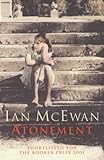
Atonement by Ian McEwan

Once reading one of the stories by Jorge Luis Borges I came across the idea that Jesus Christ was not the son of God, in reality the son of God was Judas, as his suffering was uncomparably more terrible. Jesus went through real physical torture and was crucified but he knew he would resurrect and be loved and worshiped through centuries, while Judas chose to be damned, hated, never forgiven... For what? Ten silver coins? Whose torture was worse? Hell is inside...
Poor, poor Briony, - all I could say while reading the book. I could not hate her, I could not stay indifferent. On the contrary, with every page I turned I felt that suffocating pity for her as I realized her atonement is impossible to find. The hell was hers.
The book consists of four parts. In the first and most detailed one, we see 13-year old Briony commit her crime that will lead to terrible consequences for her sister Cecilia, Robbie Turner and Briony herself. In the second part, after three years spent in prison Robbie is in surrendering France of 1940 during Dunkirk evacuation with every horror of the war and his ruined life described. The third part is devoted to already 18-year old Briony who works as a nurse in the hospital. And finally the fourth part brings us in the year 1999 with Briony, a successful novelist in her 70s. Is the atonement found? She is to answer.
We all make mistakes. Some of us are lucky that these mistakes do not cause tradgedies. Or maybe they cause and we simply do not know about them, or we prefer not to know. At the same time, how many of us long for atonement, how often we hurt with words or deeds. Who am I to judge Briony? Or to hate her? All I can say is - poor, poor Briony...
I am amazed by the talent of Ian McEwan, his ability to detail everything and create such tension that sometimes I feel like I cannot go on reading (I am unable to not read through my heart), that is why most of his books are likely to appear in my blog one of these days.

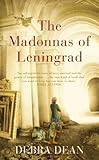
The Madonnas of Leningrad by Debra Dean

The truth is I have picked up the book because of the title (which quite often happens). The topic of the Second World War has always been of a particular interest to me. Besides those never-ending stories questioning the genuineness of the Hermitage masterpieces and everything written and filmed about the 900-day Siege of Leningrad only aroused my interest.
The main character of the book is Marina, a guide at the Hermitage Museum before the War. The author offers us two plot lines: the first one takes place in the Soviet Union during the Siege of Leningrad when Marina along with the others helps to evacuate priceless paintings and goes through the starvation, horror of the bombings and loss of the family members. The second plot line brings us to contemporary America where Marina, already in her eighties, resides with her husband having emigrated there by a chance right after the War. She is suffering from Alzheimer disease but somehow forgetting the names of her children and the look of her husband the only thing she manages to remember are those paintings in the Hermitage.
It is quite hard to judge a book that brings about such a topic. Out of the two lines the first one (depicting Marina's war experience) is much stronger written. However, it seems quite understandable to me how impossible it is for the second one to compete here. What I was missing is sharing Marina's knowledge (that obviously kept her alive when most needed) with her family members so that it did not seem to disappear.
Another problem I had was the language. I could not help thinking the author was either Russian or used Russian idiomatic phrases translated into English on purpose. I am not sure though that "something for the hens to laugh at" or "the future is written with a pitchfork on the water" rings a bell to non-Russian speakers. It felt like a word-for-word translation to me and there are much more of them in the book.
I think the books is worth reading, especially for those who lack the knowledge of the heroic effort of the Soviet People to survive those horrible 900 days and yet to try and rescue the city. I admit I am normally rather sceptical about any attempt from American writers or film directors to raise the question, but I am thankful to Debra Dean for doing so (it is not that hopeless in America, after all).

Wednesday, October 22, 2008

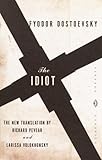
The Idiot by Fyodor Dostoevsky

Russian soul is beautiful, mysterious, destructive, resurrecting, merciful, mean, forgiving, religious... The list can go on and on. It is hard to comprehend that eternal craving for happiness and denying every possibility of it. Self-torment is the biggest enemy of Russians who are almost never in peace with themselves, with those they love, with those they try to hate and fail doing so.
Each time I am asked about the mysterious Russian soul I pick up The Idiot and give it to read. Here we are all - naked and immortalized by genius Dostoevsky.
The book is full of different characters belonging to various social levels of tsarist Russia. They all have their own tragedy, their own crime and their own punishment. The ability to describe each and every of them in such a detail makes Dostoevsky a master. In the centre of this chaos stays Prince Myshkin, yet another character representing Jesus Christ (in Crime and Punishment it was Sonya Marmeladova, in The Brothers Karamazovs - Alyosha Karamazov), with yet another attempt to survive, to stay sane, to not be crucified. The result... we know it too well. The confrontation of Myshkin and Rogozhin is the eternal good or bad, white or black with the only exception that there is no one correct answer, because they are one whole.
The book teaches love and compassion, the art of absolution and acceptance, it teaches to stay human even among animals no matter how hard or even impossible it may seem. I love this book and it stays a mystery for me why children are always made to read Crime and Punishment at school if The Idiot is the Bible of the literature. I also advise to watch the latest screen version of The Idiot (2003, Russia). The English subtitles can be found in the Internet which seldom happens to beautiful and yet too self-sufficient Russian cinema.

Friday, October 17, 2008

My September 08 Bookshelf

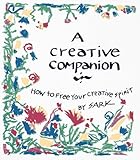
A Creative Companion by Sark

I swallowed this book and the word left on the tip of my tongue was
sweet. As the book was written in the lying position, it was read in the same way or swimming-in-the-bath condition.
When I saw A Creative Companion in the book fair, it immediately called for me with its rainbowish look. I opened and it was written by hand, I knew it belonged to me.
It is filled with ideas how to colour your life, how to bring creativity into every day, how to be happier. Smiling I leafed it through with thousands plans born in my head and heart. I immediately wanted to hug trees and put a weird advertisement, I never watched snails but I am sure they are worth changing my habits, I long for moonbaths, I hope I will dare to invite someone dangerous for tee, I am sure my inner child will be celebrated...
This is the book to make you feel special and miraculous (just the way you are, in case you have forgotten), instead of telling you one of Hollywood diets it will push you to take a bar of chocolate and enjoy life. It will reveal the treasure of being yourself and teach to equally appreaciate a child and an old person.
A Creative Companion is also filled with tips and links to other books. You are guaranteed to stay delighted. Give it a try.

The Jane Austen Book Club by Karen Joy Fowler

After my August Book Shelf I found myself devastated and hoped The Jane Austen Book Club would bring me back to life. Although I did not experience any fit of hysterical laughter I found it quite entertaining.
The book consists of six chapters, in each of them one of the six characters hosts the Book Club to discuss one of Austen's six books. During the literary polemics we learn more about the main characters who mostly appeared to be at the turning point of their lives. Different in age, occupation, even sex (there is one man among the Austen's admirers) they all share one thing - their Jane. The plot is nicely invented and the happy end seems to be the only logical possibility. On the other hand, I expected more discussions of the books and their characters, but they always appeared to be shifted aside.
I really liked the quotes of famous people about Jane Austen (although some of them were frankly rude), the idea of Ask Austen Ball and questions made by each of the characters to the reader in the end of the book.
The greatest merit of The Jane Austen Book Club is that it makes you want to read everything from Pride and Prejudice to Persuasion, as well as the biography of a writer who never being married managed to successfully marry all her characters and convince the reader that good people end up being happy despite any obstacle on the way.
According to the protagonists of the book, everyone has their Jane. Now let me discover mine.

Never Let Me Go by Kazuo Ishiguro

The book appeared quite a challenge for me and there were far too many naps from my side, I admit. To begin with, I could not understand what it was all about with donations and carers up to the 80th page or so. Only then the subject of cloning came up to bring about some answers at last.
Obviously I am not a fan of science-fiction and although the book, all the events and main characters may easily be viewed as quite ordinary with the teenagers in the boarding school first and then adult people falling in and out of love and having all normal feelings and desires, something on the back of my mind whispered all the time about uselessness of it all. Why clones? There are so many children in the world who have no chance for any art and education, who have no childhood and hardly any hope to make something out of their lives. Why to go that far?
Maybe, it is only a matter of taste. Never Let Me Go has received many awards and I do believe that awards (not always but sometimes) are given for some reason. But if I am to say, the book is mostly work rather than fun.

Thursday, September 18, 2008

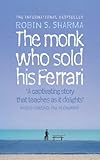
The Monk Who Sold His Ferrari by Robin Sharma

Like any esoteric book, The Monk Who Sold His Ferrari does not lay a claim to any literary value, it is an easy read and is mainly aimed to inspire you and introduce some Zen habits into your life. If you are open enough things might change quite easily.
The main character of the book is Julian Mantle, a highly successful attorney who has made an incredible career (and as expected completely failed in his private life). Yet he is admired and respected by his young colleague who is telling the story. After a stroke that happened to Julian right in the courtroom he retires, sells all his property (including his Ferrari) and goes to India. There he meets the sages and his life changes completely. He comes back to share his knowledge with the narrator as well as everyone else who longs for a better life.
I cannot say that the book is some kind of revelation, as I believe that most books now say the same things for people to finally read and apply them into life. However, I liked simple pieces of advice. For example, about the value of daily reading, listening to music, early awaking, yoga, etc. - everything you can do right here and right now. I can hardly explain why but this book very easily turned me into a vegetarian and I have been enjoying it for more than a year already.
I think our shelves should contain books like this one that can simply be opened in any place with any line in it to push us into a happier and more balanced being (unfortunately we need being pushed too often).

Thursday, September 11, 2008

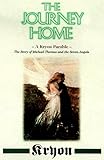
The Journey Home: A Kryon Parable, The Story of Michael Thomas and the Seven Angels


What started as a primitive Hollywood story turned to be a real treasure at the end. Maybe we still need the most important information to be given to us in the form of a fairy tale like in the childhood. Although, this is not the book for everyone, sometimes it comes too early, sometimes it comes by mistake, sometimes you need a couple of lives to realize it was on time and meant exactly for you.
The main character of the book is Michael. Lonely and unhappy he drags out his miserable existence going to work he hates, doing things he can hardly stand (how rare!). Only after he was severely bitten and found himself in the hospital he started thinking MAYBE SOMETHING WAS WRONG (there is something masochistic about human beings after all). He started his long journey home which was in reality his journey to God that is to himself. Simple but true.
What I like most about this book is the idea about the contracts we conclude before every life on Earth with a number of lessons to learn, with no actual failures as only experience, only the journey itself matter. Then suddenly the world gets less cruel, all the injustice is justified, bad guys appear to help you to learn... ideal. It does not always work (I have checked) or maybe I am not enlightened enough to face certain dramas of life with Olympic calm. But often when I look back it makes perfect sense.
The Journey Home is one night reading to leave you thoughtful for sure. It will wrap you in that warm feeling that you are absolutely loved, that you are safe, that you are in the right place. It will prove yet another time that we are not always given what we want but always what we need.

Tuesday, September 9, 2008

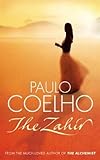
The Zahir by Paulo Coelho

There were times when Alchemist was read being put on the lap under the desk during the boring lectures of German in the university. We had a waiting list in the group for every book by Paulo Coelho. They travelled from one to another and it was forbidden to discuss before it was read by everyone. We were very young and easily impressed, everything could become a revelation. Then we were told Coelho's language was poor, his plot for the Alchemist borrowed, his works of no literary value, but nobody cared. We kept reading.
I still buy every new book by Coelho, I still wait for them, I read them all, but my favourite remains The Zahir. There was fierce competition between the publishing houses and the first translation appeared to be in Ukrainian and I decided to not wait for the Russian one. Good decision! Later on I reread it in Russian and English and nothing could compare to the melodious Ukrainian version. Anyway, I was holding it feeling excited and scared at the same time. I wanted to read it but I was afraid to stay disappointed. I was no longer a student, I was no longer under a spell. How mistaken I was. It felt like I met a boy I used to love at school and after years the feeling was still there and he was still that very boy I skipped classes with and held hands in the cinema. I really loved the book.
It was thought The Zahir was autobiographical. The protagonist of the book is a famous writer on the peak of his career who found his wife gone one day. If only she died or was kidnapped, it could add drama, it could sell more copies, it could bring more useful contacts. But she just left him, she left him. And there it all started - anger, hate, dispair, blame, denial... love.
After Lady Chatterley's Lover it was probably the closest attempt to try and reveal the woman's feelings. It was about Esther's escape from the ideal world of money making that made the protagonist to set out on a pilgrimage. Where did it bring him? To the understanding of love, which is above demanding for faithfulness, responsibility, common sense, love is just out there, free and true, quite hard to find, much harder to not lose.

Thursday, September 4, 2008

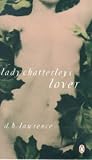
Lady Chatterley's Lover by D.H Lawrence

Men writing books about women - this is always a tricky business. Male readers find it too dramatic, female readers judge mercilessly. Moreover, the book was banned for so many years and remained the subject of hot disputes about sexuality and adultery in the literature. Everything about Lady Chatterley (publications, adaptations) brought about a scandal to arouse, undoubtedly, a greater interest from the audience.
But taking the rubbish away, this is a book about a WOMAN, her world, her pain, her inner conflict ... this is all about Constance Chatterley, her longing to be loved, to be fulfilled, to be listened to. She embodies so many women who are too suppressed by the society, ravished by dead words become obscene and dead ideas become obsessions. No matter in what century we live, a woman is always in conflict with her body and her body is in conflict with her mind:
What a frail, easily-hurt, rather pathetic thing a naked human body is: somehow a little unfinished, incomplete!..

The two moments I consider my favourite in the book are when Connie undresses herself in front of the mirror investigating her fading body and when she is holding little chickens crying with despair over her failed motherhood. If one can read these pieces remaining calm I really envy them (or rather pity). If a man can understand a woman like Lawrence did he has reached the enlightenment.
When I first read the book I was left frustrated about the end, it seemed undone and overdone at the same time. But then it occurred to me it was not about the end, it was about the process like life itself, the process of cherishing a genius of Lawrence as a linguist and as a sage.

Wednesday, September 3, 2008

My August 08 Bookshelf

A Spot of Bother by Mark Haddon

Out of complete respect for Mark Haddon who has created my dearest Christopher from The Curious Incident of the Dog in the Night-Time I picked up this book and started reading. Well, it is difficult not to look back, it is impossible to not compare. The book has not left me frustrated – it is full of good jokes, witty descriptions, a nice play on words. But it also plunges you into a never-ending conflict, into a situation where each and every character is unhappy, lost, disgusted. And I got tired of it. I got tired of a 61-year old George who constantly tries to cut himself imagining he has cancer, I got exhausted of his daughter Katie who never stops shouting and blaming everyone around without giving herself a chance to be a bit happier, I hardly had any pity for his wife Jean with her blowing hot and cold, I felt no sympathy for their son Jamie because whether a gay or not one should fight for what they love. The only characters I liked were Katie’s boyfriend Ray for his simplicity and her son Jacob just for being a normal child. That is about it. I will wait for new books from Mark Haddon and surely read them.

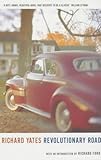
Revolutionary Road by Richard Yates

I cannot say exactly why but Lawrence’s word nothingness has stuck in my head as soon as I decided to write about Revolutionary Road. This is a book to push you into all the nothingness and meaningless and hopelessness and so much more. Although Yates mostly meant it as a reproach of the American life in the 1950-s with its craving for safety and security, it is hardly any different since then and can be applied not only to Americans. People around live their little comfy lives, small and insignificant, they will die and be forgotten. Have you ever felt like you could have done much more, you could have been much more, you could have… ah, whatever? I know a sweet girl named Rita who is now adult enough to laugh at the memory of her sitting on the sofa in my apartment sobbing for an hour that her life was not going to be any special, that she wanted to be like Marylin Monroe and die young and beautiful and be remembered. Why? Why is it better to be a woman who committed suicide or maybe was even killed in her early thirties being absolutely lonely and miserable? Why is it worse to be an ordinary housewife and cook and clean and see your kids grow and live till your late eighties in comfort of your own house and in the company of your own husband? I do not know the answer.
The main characters of the book are April and Frank Wheeler who make a lovely couple with a lot of prospects to go and dreams to achieve. They believe they are special in everything and yet they go around shouting, having lovers, hating one another, their children, themselves. It is much easier to make up a little Utopia about leaving everyone and everything and flee to Paris than to try and live and be happy and appreciate. Emptiness is there to follow, emptiness and nothingness.
The book left me sad and thoughtful. I also long for a special life and often forget it is already special only because it is mine. The critics call Revolutionary Road one of the best books of the 20th century. They are to judge… All I know is that after reading it I want to hold my husband’s hand more and just be.


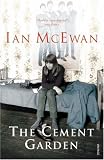
The Cement Garden by Ian McEwan

It took me a day to read the book but I find it difficult to describe my feelings. It was like watching a thriller where the victim is being chased, then caught, then tortured and slowly killed right in front of your eyes while the only thing you are able to say all over again is “how horrible” with still continue watching.
My emotions are monosyllabic. My feelings are confused. It is a powerful prose and perfect style. I would agree it is darkly impressive. But then I closed the book and was left there gasping for air. I know the life is full of weirdness and it has been a while I judged somebody the last time, but still … what is the point? What is out there for me in that cement garden of frightened and misled half-children or half-adults? What does it teach me? What is the mission? They say not everything has a mission and a deep meaning I am always eager to find, but even if it does not, it should.

This has been a hard month on me with three books that gave mostly work rather than pleasure. And I am holding now the Jane Austen Book Club and sincerely hope to experience something between giggling and hysterical laughter and no compromise is accepted here.

Wednesday, August 27, 2008

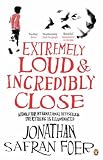
Extremely Loud and Incredibly Close by Jonathan Safran Foer

For those of you who will see the book in the shop and read on the cover about the 9/11 motif I advise to not put it back, to not think about another trick to make you buy the book or sell more using the well-known topic but to look inside, then read a bit, then love it.
The first smile brightened my face when I saw a number of pictures, photos and multi-coloured words in the book. We are all a bit like Alice sometimes seeing no use in books without pictures and dialogues. At the same time, the book is mature, the book is moving, the book is hilarious, the book is heartbreaking, the book is true. It is a real rabbit hole expecting those who yearn for proper fiction and a sleepless night under a lampshade with the city sleeping behind your window.
Although Foer touches a number of topics including the terrorist attack on 11 September, 2001, the bombing of Dresden in World War II and atomic bombings of Hiroshima and Nagasaki; although you feel a tragedy behind every character in the novel, my woman’s heart pounding was solely about Oskar Shell, the protagonist of the book, to not be washed away by that adult world he entered so early in search of the truth about his absolutely worshiped father´s death.
This is a book about an adorable boy, earnest and sweet, confused and determined. I read it laughing, I read it crying with a lump in my throat. Oskar is just no different from so many other kids on my way who long to be understood, who are out there for some explanations.

Sunday, August 24, 2008

The Shadow of the Wind by Carlos Ruiz Zafón

This is one of those cases when the book makes its long journey to finally make you grab it and hardly put it down till the last page is read and no continuation is found or ever known to exist. The first time I heard about this book was during my stay in beautiful Barcelona (the events of the book take place in the same very city – coincidence №1). I was sitting on the bench reading the Russian translation of Paulo Coelho’s “The Zahir”. A woman sat down next to me, opened her book and started reading as well. Out of sheer curiosity that always pushes me to peep at what people are reading in the underground or airports I looked at her book and saw she was reading just the same book but in Spanish (coincidence №2). We talked like those twins in Indian movies that had been separated long time before and only found each other years later with the help of the identical mole somewhere on the right hip. The woman’s name was Maria. It was one of those meetings so unforgettable and sweet when there was no necessity to get in contact ever again not to break the spell. That was the moment I first heard about “La Sombra del Viento”. Maria carefully wrote the name of the book on a strangely formed piece of paper and I carefully lost it somewhere between Zurich and Cologne. In 2 months or so a friend of mine told me he had bought a very interesting book and it made him stay sleepless. I am not sure that there was any necessity to ask him the name of the book. Surely it was “The Shadow of the Wind” (coincidence №3). How many more coincidences did I need? Zero. I dived into it. I ate it. I drank it. I definitely took joy in it.
Although I speak some Spanish and even borrowed the original version from the library, my impatience won and I read it in English only because it was faster (the translation was so good and the language so rich that for the first time in my life I looked up the name of the translator and wondered if the person was bilingual).
The main character of the book is Daniel Sempere. After being taken by his father to the Cemetery of Forgotten Books and allowed to pick up only one book from the shelf, he chose “The Shadow of the Wind” by Julián Carax. Since that moment his adventures would start. He would learn to distinguish between real and false, he would lose and find more often quite not the same that had been lost, he would meet new friends, he would find love, he would learn compassion, he would become adult and mature. While reading you will quite definitely find yourself covered with cold sweat getting quite suspicious about every squeak of every door in the house. This is a book about books, it gives you that strange feeling like watching a film where somebody is watching a film, although in this case the strangeness is likely to appear as an advantage.

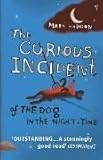
The Curious Incident of the Dog in the Night-Time by Mark Haddon

Christopher Boone being my favourite literary character makes me reread this marvelous book again and again, giving it as a present to dear people, bringing it as a little treasure to my students and after long discussions enjoying the prime-numbered chapters sympathizing with fifteen-year-old boy who suffers from a mild form of autism, admiring his mathematical abilities and seeing him stand the test of the “normal” world full of noise, lies, strange emotions, puzzling idioms and undesired physical contact.

Advised by his teacher to start writing a story and inspired by Sherlock Holmes adventures, Christopher begins his own investigation into the murder of the neighbour dog describing it in his own description-missing way. This brings about unexpected consequences and reveals naïve bravery of a little boy who makes us think hard about the relevance of our own normality.

If I only had one word to define the book I would say “incredible”. If there was only one word to describe my feelings for Christopher the word would be “tenderness”.

Together with the Curious Incident some films revealing the topic of autism came into my life making the people around me wonder - if the reason of such great interest was my knowing someone who suffers from a similar disease or my own abnormality… Anyways, the films are good and mostly known: “The Rain Man”, “What’s Eating Gilbert Grape?” and “Snow Pie”. Enjoy…