Thursday, September 18, 2008

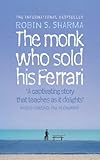
The Monk Who Sold His Ferrari by Robin Sharma

Like any esoteric book, The Monk Who Sold His Ferrari does not lay a claim to any literary value, it is an easy read and is mainly aimed to inspire you and introduce some Zen habits into your life. If you are open enough things might change quite easily.
The main character of the book is Julian Mantle, a highly successful attorney who has made an incredible career (and as expected completely failed in his private life). Yet he is admired and respected by his young colleague who is telling the story. After a stroke that happened to Julian right in the courtroom he retires, sells all his property (including his Ferrari) and goes to India. There he meets the sages and his life changes completely. He comes back to share his knowledge with the narrator as well as everyone else who longs for a better life.
I cannot say that the book is some kind of revelation, as I believe that most books now say the same things for people to finally read and apply them into life. However, I liked simple pieces of advice. For example, about the value of daily reading, listening to music, early awaking, yoga, etc. - everything you can do right here and right now. I can hardly explain why but this book very easily turned me into a vegetarian and I have been enjoying it for more than a year already.
I think our shelves should contain books like this one that can simply be opened in any place with any line in it to push us into a happier and more balanced being (unfortunately we need being pushed too often).

Thursday, September 11, 2008

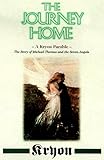
The Journey Home: A Kryon Parable, The Story of Michael Thomas and the Seven Angels


What started as a primitive Hollywood story turned to be a real treasure at the end. Maybe we still need the most important information to be given to us in the form of a fairy tale like in the childhood. Although, this is not the book for everyone, sometimes it comes too early, sometimes it comes by mistake, sometimes you need a couple of lives to realize it was on time and meant exactly for you.
The main character of the book is Michael. Lonely and unhappy he drags out his miserable existence going to work he hates, doing things he can hardly stand (how rare!). Only after he was severely bitten and found himself in the hospital he started thinking MAYBE SOMETHING WAS WRONG (there is something masochistic about human beings after all). He started his long journey home which was in reality his journey to God that is to himself. Simple but true.
What I like most about this book is the idea about the contracts we conclude before every life on Earth with a number of lessons to learn, with no actual failures as only experience, only the journey itself matter. Then suddenly the world gets less cruel, all the injustice is justified, bad guys appear to help you to learn... ideal. It does not always work (I have checked) or maybe I am not enlightened enough to face certain dramas of life with Olympic calm. But often when I look back it makes perfect sense.
The Journey Home is one night reading to leave you thoughtful for sure. It will wrap you in that warm feeling that you are absolutely loved, that you are safe, that you are in the right place. It will prove yet another time that we are not always given what we want but always what we need.

Tuesday, September 9, 2008

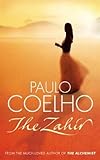
The Zahir by Paulo Coelho

There were times when Alchemist was read being put on the lap under the desk during the boring lectures of German in the university. We had a waiting list in the group for every book by Paulo Coelho. They travelled from one to another and it was forbidden to discuss before it was read by everyone. We were very young and easily impressed, everything could become a revelation. Then we were told Coelho's language was poor, his plot for the Alchemist borrowed, his works of no literary value, but nobody cared. We kept reading.
I still buy every new book by Coelho, I still wait for them, I read them all, but my favourite remains The Zahir. There was fierce competition between the publishing houses and the first translation appeared to be in Ukrainian and I decided to not wait for the Russian one. Good decision! Later on I reread it in Russian and English and nothing could compare to the melodious Ukrainian version. Anyway, I was holding it feeling excited and scared at the same time. I wanted to read it but I was afraid to stay disappointed. I was no longer a student, I was no longer under a spell. How mistaken I was. It felt like I met a boy I used to love at school and after years the feeling was still there and he was still that very boy I skipped classes with and held hands in the cinema. I really loved the book.
It was thought The Zahir was autobiographical. The protagonist of the book is a famous writer on the peak of his career who found his wife gone one day. If only she died or was kidnapped, it could add drama, it could sell more copies, it could bring more useful contacts. But she just left him, she left him. And there it all started - anger, hate, dispair, blame, denial... love.
After Lady Chatterley's Lover it was probably the closest attempt to try and reveal the woman's feelings. It was about Esther's escape from the ideal world of money making that made the protagonist to set out on a pilgrimage. Where did it bring him? To the understanding of love, which is above demanding for faithfulness, responsibility, common sense, love is just out there, free and true, quite hard to find, much harder to not lose.

Thursday, September 4, 2008

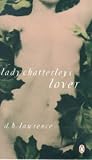
Lady Chatterley's Lover by D.H Lawrence

Men writing books about women - this is always a tricky business. Male readers find it too dramatic, female readers judge mercilessly. Moreover, the book was banned for so many years and remained the subject of hot disputes about sexuality and adultery in the literature. Everything about Lady Chatterley (publications, adaptations) brought about a scandal to arouse, undoubtedly, a greater interest from the audience.
But taking the rubbish away, this is a book about a WOMAN, her world, her pain, her inner conflict ... this is all about Constance Chatterley, her longing to be loved, to be fulfilled, to be listened to. She embodies so many women who are too suppressed by the society, ravished by dead words become obscene and dead ideas become obsessions. No matter in what century we live, a woman is always in conflict with her body and her body is in conflict with her mind:
What a frail, easily-hurt, rather pathetic thing a naked human body is: somehow a little unfinished, incomplete!..

The two moments I consider my favourite in the book are when Connie undresses herself in front of the mirror investigating her fading body and when she is holding little chickens crying with despair over her failed motherhood. If one can read these pieces remaining calm I really envy them (or rather pity). If a man can understand a woman like Lawrence did he has reached the enlightenment.
When I first read the book I was left frustrated about the end, it seemed undone and overdone at the same time. But then it occurred to me it was not about the end, it was about the process like life itself, the process of cherishing a genius of Lawrence as a linguist and as a sage.

Wednesday, September 3, 2008

My August 08 Bookshelf

A Spot of Bother by Mark Haddon

Out of complete respect for Mark Haddon who has created my dearest Christopher from The Curious Incident of the Dog in the Night-Time I picked up this book and started reading. Well, it is difficult not to look back, it is impossible to not compare. The book has not left me frustrated – it is full of good jokes, witty descriptions, a nice play on words. But it also plunges you into a never-ending conflict, into a situation where each and every character is unhappy, lost, disgusted. And I got tired of it. I got tired of a 61-year old George who constantly tries to cut himself imagining he has cancer, I got exhausted of his daughter Katie who never stops shouting and blaming everyone around without giving herself a chance to be a bit happier, I hardly had any pity for his wife Jean with her blowing hot and cold, I felt no sympathy for their son Jamie because whether a gay or not one should fight for what they love. The only characters I liked were Katie’s boyfriend Ray for his simplicity and her son Jacob just for being a normal child. That is about it. I will wait for new books from Mark Haddon and surely read them.
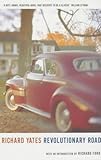
Revolutionary Road by Richard Yates

I cannot say exactly why but Lawrence’s word nothingness has stuck in my head as soon as I decided to write about Revolutionary Road. This is a book to push you into all the nothingness and meaningless and hopelessness and so much more. Although Yates mostly meant it as a reproach of the American life in the 1950-s with its craving for safety and security, it is hardly any different since then and can be applied not only to Americans. People around live their little comfy lives, small and insignificant, they will die and be forgotten. Have you ever felt like you could have done much more, you could have been much more, you could have… ah, whatever? I know a sweet girl named Rita who is now adult enough to laugh at the memory of her sitting on the sofa in my apartment sobbing for an hour that her life was not going to be any special, that she wanted to be like Marylin Monroe and die young and beautiful and be remembered. Why? Why is it better to be a woman who committed suicide or maybe was even killed in her early thirties being absolutely lonely and miserable? Why is it worse to be an ordinary housewife and cook and clean and see your kids grow and live till your late eighties in comfort of your own house and in the company of your own husband? I do not know the answer.
The main characters of the book are April and Frank Wheeler who make a lovely couple with a lot of prospects to go and dreams to achieve. They believe they are special in everything and yet they go around shouting, having lovers, hating one another, their children, themselves. It is much easier to make up a little Utopia about leaving everyone and everything and flee to Paris than to try and live and be happy and appreciate. Emptiness is there to follow, emptiness and nothingness.
The book left me sad and thoughtful. I also long for a special life and often forget it is already special only because it is mine. The critics call Revolutionary Road one of the best books of the 20th century. They are to judge… All I know is that after reading it I want to hold my husband’s hand more and just be.
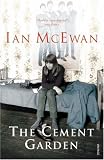

The Cement Garden by Ian McEwan

It took me a day to read the book but I find it difficult to describe my feelings. It was like watching a thriller where the victim is being chased, then caught, then tortured and slowly killed right in front of your eyes while the only thing you are able to say all over again is “how horrible” with still continue watching.
My emotions are monosyllabic. My feelings are confused. It is a powerful prose and perfect style. I would agree it is darkly impressive. But then I closed the book and was left there gasping for air. I know the life is full of weirdness and it has been a while I judged somebody the last time, but still … what is the point? What is out there for me in that cement garden of frightened and misled half-children or half-adults? What does it teach me? What is the mission? They say not everything has a mission and a deep meaning I am always eager to find, but even if it does not, it should.

This has been a hard month on me with three books that gave mostly work rather than pleasure. And I am holding now the Jane Austen Book Club and sincerely hope to experience something between giggling and hysterical laughter and no compromise is accepted here.