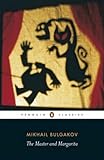
 Among all the books you may find in the libraries, shops and on the bookshelves in your grandparents' house there are those to enchant you or to bore you to death, to make you smile and even laugh or to drop tears. However, there is another category of books. They are those to love or to hate. Those books will endlessly provoke hot discussions, they will be forbidden by one regime and praised by another, they will be cursed and then introduced into a school programme as some kind of masterpiece. Master and Margarita is such a book. It was read by my parents' generation under the desk in the office (if found with the book you would easily have lost your job) and by me at school. There is no doubt that it is the most enigmatic book in the Russian literature. This is the book they always fail to film, simply because it is quite impossible.
The novel brings us simultaneously to Moscow of 1930-s visited by a mysterious magician named Woland and his equally mysterious companions and the Jurusalem of Pontius Pilat. The main characters of the book are the Master, whose novel describing the meeting of Pontius Pilat and Jesus was severely critisized to have resulted in his burning the manuscript and getting into a mental hospital, and Margarita, his devoted lover, who strikes a bargain with Woland (none other than Satan in the book) to rescue her Master.
The plot is highly complicated especially for a non-Russian reader as it is abundant in realia of the Soviet times and filled with a number of secondary characters. Yet a little patience may reward you enormously.
One of the most intriguing figures in the novel is definitely Woland. Since when did Satan become so sadly appealing? Is it a whim of the modern times from Marie Corelli and her "The Sorrows of Satan" to Al Pacino's Satan in "The Devil's Advocate"? Hard to say. But the fact you take Satan as a sage is evident. No matter who has created it all, what was before and what will be after, if you live from your heart and are true to yourself and those you love, there is nothing to be afraid of.
The most quoted line in The Master and Margarita is probably "Manuscripts don't burn". It can be interpreted in many ways. Sic transit gloria mundi. Everything passes but only real things stay, they can be destroyed and yet they will resurrect and we are remembered through centuries and generations only if we have managed to create them despite all the efforts and pains.
The plot is highly complicated especially for a non-Russian reader as it is abundant in realia of the Soviet times and filled with a number of secondary characters. Yet a little patience may reward you enormously.
One of the most intriguing figures in the novel is definitely Woland. Since when did Satan become so sadly appealing? Is it a whim of the modern times from Marie Corelli and her "The Sorrows of Satan" to Al Pacino's Satan in "The Devil's Advocate"? Hard to say. But the fact you take Satan as a sage is evident. No matter who has created it all, what was before and what will be after, if you live from your heart and are true to yourself and those you love, there is nothing to be afraid of.
The most quoted line in The Master and Margarita is probably "Manuscripts don't burn". It can be interpreted in many ways. Sic transit gloria mundi. Everything passes but only real things stay, they can be destroyed and yet they will resurrect and we are remembered through centuries and generations only if we have managed to create them despite all the efforts and pains.